The Anatomy of Luxury Watch Branding

Heritage
Patek Philippe, Vacheron Constantin and Audemars Piguet draw on centuries of history to anchor their position in the watchmaking hierarchy. Their codes centre on tradition, artisanal continuity and the passing of value between generations. "You never really own a Patek Philippe, you merely look after it for the next generation" remains the purest expression of heritage branding ever written.
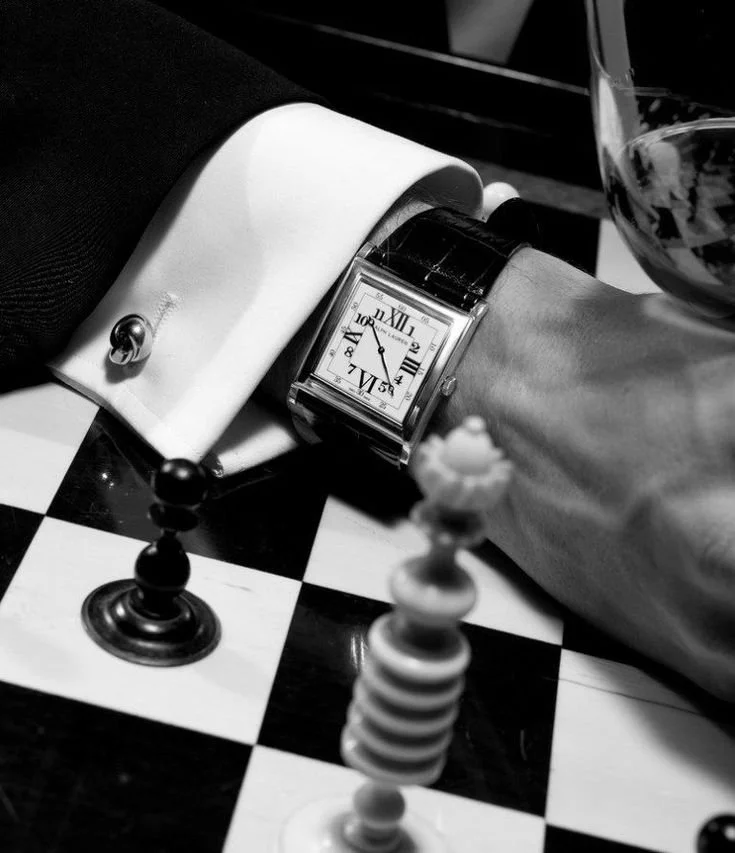
Craftsmanship
A single complicated watch can absorb hundreds of hours of manual work, often at the bench of one artisan. Maisons such as A. Lange & Söhne and Jaeger-LeCoultre make that labour visible through open casebacks, hand engraving and enamel work. The buyer is not acquiring a material object but a narrative of human excellence.
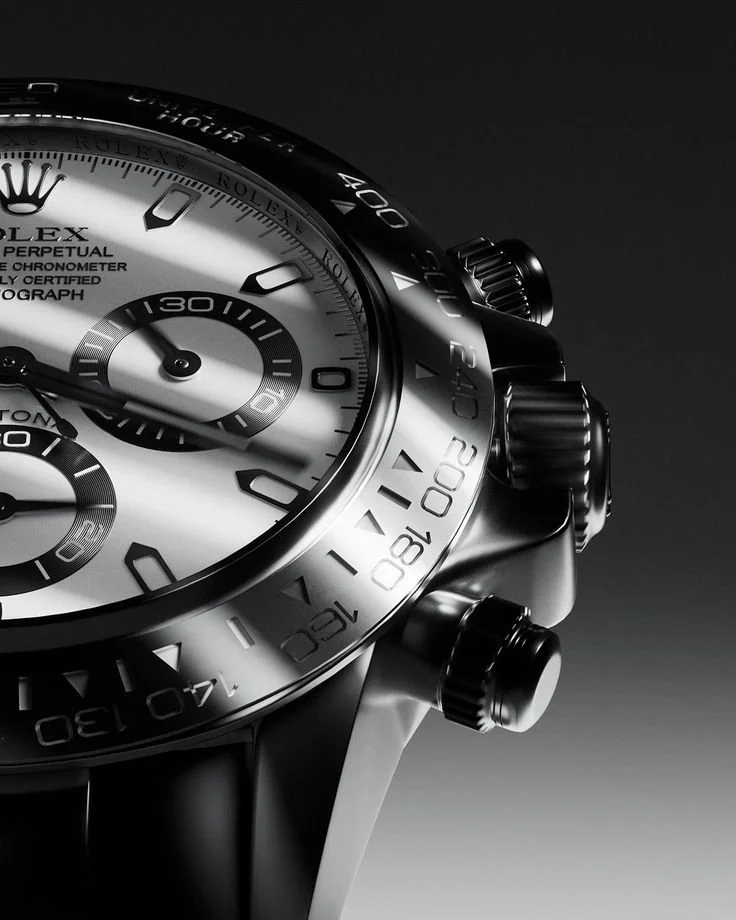
Scarcity
Patek Philippe and Rolex restrict production by choice, not by capability. The result is waiting lists, secondary markets that trade above retail, and a mystique that no advertising budget could manufacture. Restraint, in luxury, is a form of communication.
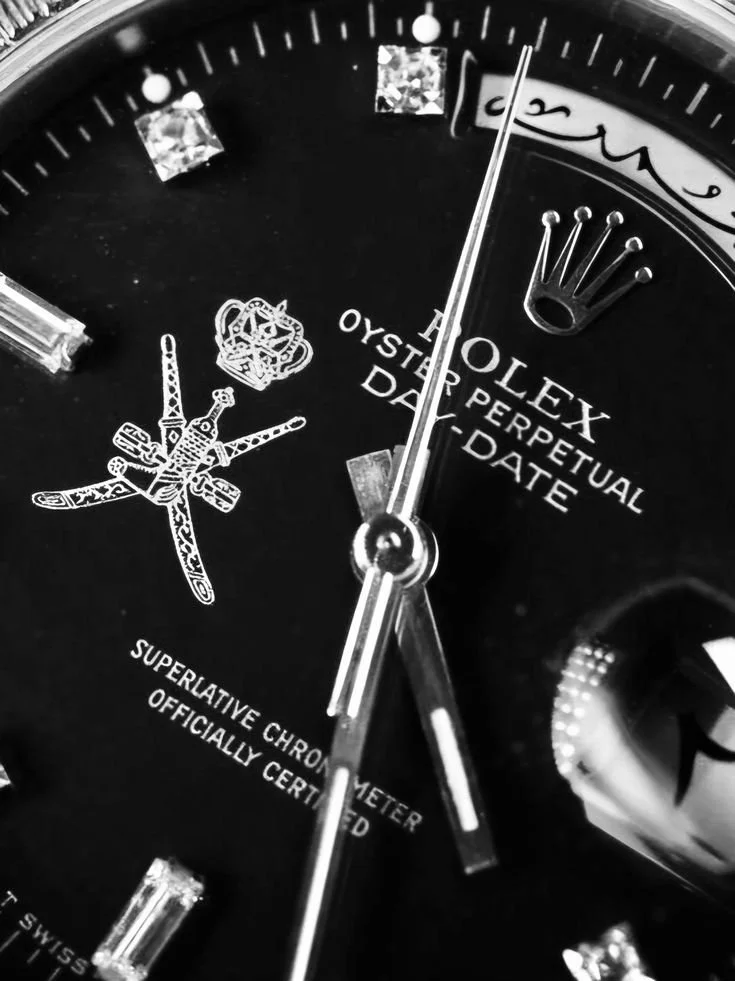
Myth-Making
Rolex bound itself to exploration, deep-sea diving and motorsport. Breguet invokes Marie Antoinette and Napoleon. Richard Mille builds its story around endurance and extreme materials. These narratives are not decorative — they are the emotional architecture of the brand.
Time as personal brand status
Introduction
In the luxury universe, value is not acquired through price, nor through material quality or performance — though quality and functionality remain the foundation of the category. It is acquired through symbolic DNA: cultural meaning, and the craftsmanship of identity. In marketing language, we call this the brand.
Nowhere is this dynamic more pronounced than in luxury timepieces, a sector where branding does not operate as a marketing tool but as the soul of the object. Serving as both art and science, branding becomes the alchemy that turns products into coveted emblems of power, heritage and social distinction.
This research decodes the anatomy of the luxury watch brand — examining how crafting a watch rivals the complexity and duration of building an exotic car, and investigating how Maisons such as Rolex, Audemars Piguet, Patek Philippe and Richard Mille invent, build, manage and protect their brand identity and equity while producing timepieces that become cultural symbols of identity performance, power and social status.
The gatekeepers of watchmaking have mastered not only a multidimensional construct but the art and science of visual identity, product design and, above all, storytelling — a discipline built on myth-making, ritual, scarcity and a highly curated white-glove experience.
Drawing on Kapferer's Luxury Brand Identity Prism and Aaker's model of brand equity, this research dissects the components that constitute a luxury watch brand's identity: physical attributes, brand personality, culture, consumer relationship, self-image and reflection. Branding strategy orchestrates these elements into a cohesive narrative, transforming functional instruments into symbolic artifacts of exclusivity.
At the heart of this inquiry is the recognition that brand equity in this sector depends heavily on intangible assets — prestige, heritage, perceived exclusivity and cultural symbolism. Luxury watch Maisons have mastered the creation of aura: limited editions, celebrity endorsement, presence at Formula 1 and prestigious regattas, and private events staged for a closed audience. These efforts elevate brand equity while curating access to elite circles, making the buyer a gatekeeper of cultural capital.
Drawing on Kawamura's sociology of fashion, which interprets fashion objects as cultural symbols within a social institution, and Bourdieu's theory of cultural capital, which examines how material goods are deployed to negotiate social position, this study treats the luxury timepiece as more than an accessory or instrument. It is a symbol of wealth, taste and elite position, communicated through unspoken protocols understood within specific subcultures.
Literature Review
Precision and technical expertise sit at the core of the luxury watch industry, but it is storytelling and myth-creation that communicate craftsmanship, heritage and identity. Positioning depends on brand codes: symbolism, design language, narrative and marketing strategy. As the global luxury market evolves and consumer expectations shift, Maisons must balance the preservation of exclusivity against innovation in design, marketing and identity.
This review examines existing research on luxury branding with particular focus on watches, considering how heritage, symbolism, craftsmanship, storytelling, celebrity endorsement and digital engagement shape perception and value. It also examines how traditional and contemporary Maisons interpret these codes differently to establish distinct brand DNA — Patek Philippe against Richard Mille — and identifies gaps in the literature, particularly the absence of ethnographic work among ultra-high-net-worth individuals.
1. Theoretical Framework: Luxury Branding and Semiotics
Kapferer and Bastien (2009) define luxury as value creation that transcends utility and performance. Luxury brands must convey not only rarity and quality, but aesthetic excess, craftsmanship and cultural symbolism. Kapferer's anti-laws of marketing are essential to understanding this sector: many Maisons adhere to principles that run directly counter to mass-market strategy — restricting availability, avoiding aggressive promotion, and favouring heritage over trend.
Barthes's semiotics (1967) helps decipher how these brands use signs to convey identity and prestige. In watchmaking, every element of design — the guilloché dial, the sapphire caseback, the tourbillon — carries meaning that resonates with discerning collectors.
2. Heritage and Inheritance
Chevalier and Mazzalovo (2008) and Beverland (2004) identify heritage as the ultimate branding tool in luxury. Patek Philippe, Audemars Piguet and Vacheron Constantin leverage histories spanning centuries to secure their position in the watchmaking hierarchy. Their codes centre on tradition, artisanal craft and the intergenerational transmission of value. Patek Philippe's line — that one never truly owns the watch, but keeps it for the next generation — remains the definitive illustration of heritage branding.
Urde, Greyser and Balmer (2007) describe this practice as corporate heritage branding: narrating the brand across generations while modernising selectively. The result is an emotional connection with collectors who value permanence over novelty.
3. Innovation and Disruption: Richard Mille and Hublot
Newer houses have established conventions of their own. Richard Mille, founded in 2001, produces watches closer to racing machinery than to traditional timepieces, using carbon nanotubes, LITAL alloy and sapphire crystal. The Maison's codes reference ultra-lightweight and shock-resistant calibres, aerospace engineering and sport — McLaren F1, Rafael Nadal.
These developments carry symbolic weight alongside technical merit. For a new elite, the Richard Mille has become a status object combining performance, wealth and boldness. Dubois and Laurent (1994) argue that such objects function as status badges that reinforce aspirational identity.
Hublot pursued a parallel route with its Art of Fusion, pairing gold with rubber and collaborating with musicians, athletes and artists. The Big Bang demonstrates how brand codes can fuse tradition with contemporary culture to reach younger high-net-worth consumers.
4. Craftsmanship and Manual Mastery
Craftsmanship remains the core value of the luxury watch brand. McNeil and McCain (2019) argue that luxury buyers purchase narratives of human excellence rather than material goods. A single watch may absorb hundreds of hours of manual labour, sometimes at the bench of one artisan, giving it emotional and symbolic value beyond function.
A. Lange & Söhne and Jaeger-LeCoultre emphasise transparency through workshops, documentation and open casebacks that reveal the movement. Excess ornamentation — hand engraving, enamel painting, minute repeater finishing — creates a visual and conceptual code that communicates uniqueness and skill.
5. Brand Storytelling and Mythology
Escalas and Bettman (2005) explain how consumers construct and express identity through brand narrative. Luxury watchmaking achieves this by mythologising founders, by association with historical moments such as Omega and NASA, and through sport and adventure — Rolex with deep-sea diving and mountaineering.
Richard Mille returns repeatedly to endurance. Breguet invokes Marie Antoinette and Napoleon to position its watches as artifacts of grandeur. These stories are not decorative. They form the emotional architecture of the brand and provide a legacy for ultra-high-net-worth buyers to participate in.
6. Digital Luxury and the Changing Landscape
The shift toward digital communication and e-commerce has created new opportunities and new risks. Ko, Costello and Taylor (2019) note that digital marketing presents both to exclusivity. Bulgari and Cartier have built sophisticated digital narratives without eroding prestige; others avoid online sale entirely.
Following Bourdieu (1984), influencers, critics and communities such as WatchAnish and Hodinkee act as cultural intermediaries that shape legitimacy and taste. After decades of distance from direct communication, Rolex now reaches a younger, digitally fluent audience through targeted storytelling.
7. Exclusivity, Rarity and Collector Culture
Rarity is a crucial code. Patek Philippe and Rolex restrict production not because of technical limitation but to enhance desirability and protect value. The result is waiting lists, elevated secondary-market pricing and reinforced mystique.
Collectors — particularly those within the UHNWI category — function as co-authors of the brand rather than merely its customers. Thomas (2007) observes that collectors seek objects validating cultural capital, social standing and personal taste. Audemars Piguet capitalises on this through one-to-one consultation, limited editions and exclusive events that formalise membership in a closed club.
8. Gender and Cultural Representation
Gender remains significant but frequently overlooked in watch branding. Historically, the major houses addressed men, associating watches with achievement, masculinity and inheritance. That is changing: Piaget, Chanel and Cartier are broadening their codes toward greater aesthetic flexibility and inclusivity.
Cultural codes are evolving in parallel. The category now depends heavily on Chinese buyers, producing glocalisation strategies (Robertson, 1995) expressed through tailored storytelling and the occasional deployment of symbols such as dragons, red lacquer or jade tones in limited editions.
9. Ethical Branding and Sustainability
Sustainability and ethical production have recently entered the luxury code system. Watch brands have not historically been associated with environmental discourse, but consumer expectation is shifting. Panerai and IWC now emphasise carbon neutrality, responsible packaging and traceable sourcing.
Sustainable innovation is itself becoming a brand asset. Ulysse Nardin's Diver Net, constructed from recycled fishing nets, exemplifies the approach, appealing particularly to younger collectors aligned with value-driven luxury.
10. Gaps in the Literature
Despite extensive work on branding, heritage and luxury theory, in-depth qualitative research into how UHNWIs actually interpret these codes remains rare. Most studies rely on surveys or focus groups, methods that systematically exclude affluent consumers known for their discretion.
Participant observation, in-depth interviews and ethnographic work are needed within collector communities, at private exhibitions and at luxury events. Further research is also required on digitally native luxury consumers and their distinct method of reading symbols relative to older generations — though Dion and Arnould (2011) have begun to address the co-creation of luxury meaning between brand and consumer.
Conclusion
Luxury watch brand identity is an intricate symbolic ecosystem shaped by tradition, innovation, culture and emotion. From Richard Mille's futurism to Patek Philippe's heritage narrative, brand codes are deliberately constructed to address consumers who read watches as markers of taste and identity.
Those codes are themselves in motion as expectations shift toward openness, inclusivity and digital fluency. Understanding the cultural weight these objects carry will require qualitative and ethnographic methods capable of reaching the consumers who matter most — and who have proven hardest to study.
References
Barthes, R. (1967). Elements of Semiology. Hill and Wang.
Beverland, M. (2004). Unpacking the mystery of branding: Towards a theoretical model of brand authenticity. Marketing Review, 4(2), 115–130.
Bourdieu, P. (1984). Distinction: A Social Critique of the Judgment of Taste. Harvard University Press.
Chevalier, M., & Mazzalovo, G. (2008). Luxury Brand Management: A World of Privilege. Wiley.
Dion, D., & Arnould, E. (2011). Retail luxury strategy: Assembling charisma through art and magic. Journal of Retailing, 87(4), 502–520.
Dubois, B., & Laurent, G. (1994). Attitudes towards the concept of luxury: An exploratory analysis. Asia-Pacific Advances in Consumer Research, 1, 273–278.
Escalas, J. E., & Bettman, J. R. (2005). Self-construal, reference groups, and brand meaning. Journal of Consumer Research, 32(3), 378–389.
Kapferer, J.-N., & Bastien, V. (2012). The Luxury Strategy: Break the Rules of Marketing to Build Luxury Brands (2nd ed.). Kogan Page.
Ko, E., Costello, J. P., & Taylor, C. R. (2019). What is a luxury brand? A new definition and review of the literature. Journal of Business Research, 99, 405–413.
McNeil, P., & McCain, G. (2019). Luxury: A Rich History. Oxford University Press.
Robertson, R. (1995). Glocalization: Time-space and homogeneity-heterogeneity. In Global Modernities (pp. 25–44). Sage.
Thomas, D. (2007). Deluxe: How Luxury Lost Its Luster. Penguin Press.
Urde, M., Greyser, S. A., & Balmer, J. M. (2007). Corporate brands with a heritage. Journal of Brand Management, 15(1), 4–19.